How Non-Invasive Leak Detection Finds Hidden Water Leaks Without Digging
Hidden water leaks can waste water, raise bills and damage walls, floors or outdoor areas before the source becomes obvious. Modern non-invasive leak detection uses specialist equipment to pinpoint hidden problems with far less disruption, helping property owners move from uncertainty to targeted repair without unnecessary digging or destructive investigation.
A hidden water leak can be difficult to trace because water often travels away from the damaged pipe before visible signs appear. Damp patches, falling water pressure, unusual pipe sounds or a rising water bill may be the first warning. Instead of digging across a garden or opening several sections of flooring, a professional leak detection service can use non-invasive testing to narrow down the source. Modern methods help engineers investigate pipework beneath floors, behind walls and underground with greater precision. This targeted approach can reduce disruption, protect surrounding surfaces and make the next repair step much easier to plan.
What Non-Invasive Leak Detection Means
Non-invasive leak detection is about locating a fault before unnecessary digging, drilling or opening up begins. Engineers use specialist equipment to gather evidence and narrow the search to a much smaller area.
It does not mean every repair can be completed without access. Once the damaged pipe is located, a targeted section may still need to be opened. The important difference is that the repair team knows where to focus instead of relying on guesswork.
How Hidden Leaks Are Located
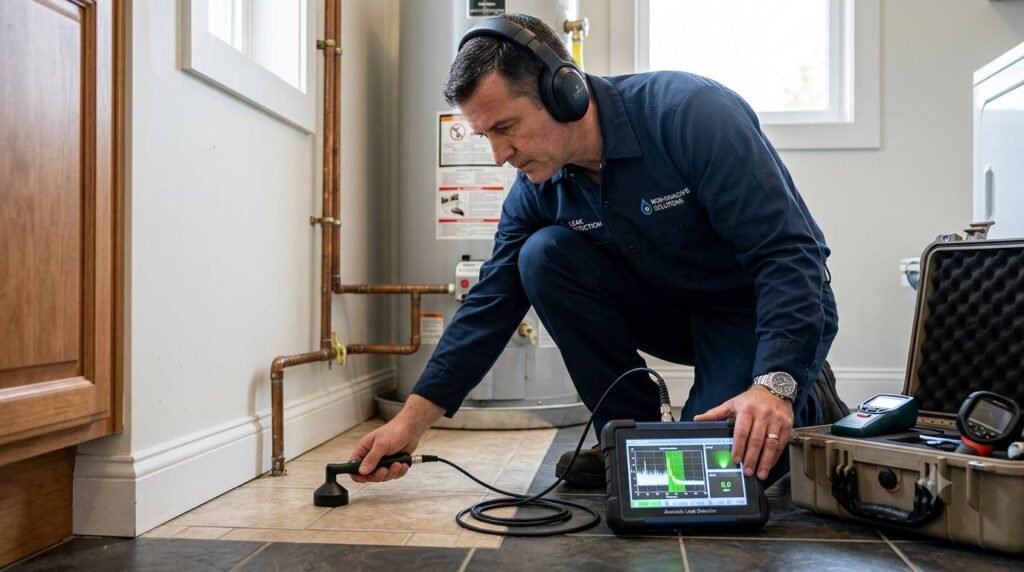
Different leaks leave different clues. Acoustic listening equipment can detect the sound of water escaping from a pressurised pipe, including pipework hidden beneath floors or underground.
Thermal imaging can reveal temperature changes linked with escaping water, while moisture meters help identify excess moisture within walls, floors or ceilings. Tracer gas can also be used to help pinpoint difficult leaks. Engineers may combine methods when one test alone does not provide enough information.
Why Precision Matters
Finding the likely source before opening surfaces can reduce avoidable damage. A professional leak detection service is particularly useful where water pipes run beneath concrete, flooring, driveways or other finished areas. By narrowing the problem to a specific point, engineers can plan access more carefully and keep repair work focused.
Accurate detection can also save time. Instead of inspecting several possible areas, the engineer can concentrate on the evidence gathered during testing and explain the most suitable next step.
Warning Signs Worth Acting On
Hidden leaks may develop slowly. Common warning signs include unexplained rises in water bills, lower water pressure, damp or discoloured surfaces, mould, pooling water, or sounds of running water when taps are turned off.
If you notice these signs, avoid random digging or opening walls yourself. Make a note of when the problem started, check whether your normal water use has changed, and arrange professional investigation before the leak causes wider damage.
What Happens After Detection?
Once the source is identified, the engineer can explain what access and repair are likely to involve. Depending on the location and condition of the pipe, work may include repairing a damaged section or replacing part of the water supply pipe.
Because the leak has already been narrowed down, any excavation or opening can be directed towards the affected area. This helps keep disruption proportionate to the repair needed.
FAQs
Q.1 Can a Leak Be Found Under Concrete Without Digging?
Ans: Specialist acoustic, thermal and tracer methods can help narrow down a leak beneath concrete before any targeted access is made.
Q.2 Does Thermal Imaging Find Every Water Leak?
Ans: No. Thermal imaging is useful in suitable conditions, but engineers may also need acoustic equipment, moisture meters or tracer gas.
Q.3 Can a Hidden Leak Increase My Water Bill?
Ans: Yes. Water escaping continuously from a damaged pipe can cause an unexplained rise in water use and cost.
Q.4 Should I Dig If I Suspect an Underground Leak?
Ans: It is usually better to locate the leak first, as random digging can cause unnecessary damage and still miss the source.
Q.5 Can the Leak Be Repaired Once It Is Found?
Ans: In many cases, yes. The repair method depends on the pipe, its position and the extent of the damage.
The Bottom Line
Hidden leaks are easier to manage when the search starts with evidence rather than guesswork. Acoustic listening, thermal imaging, moisture testing and tracer methods can help identify concealed leaks behind walls, below floors or underground while limiting unnecessary disturbance. Early action also reduces the chance of ongoing water loss and wider property damage. This matters because a small concealed leak can continue for days or weeks before the affected pipe becomes obvious from the surface.
Non-invasive detection does not mean that no surface will ever need to be opened. Repairs may still require access, but accurate testing can make that access much more targeted. If you notice damp, reduced pressure, unexplained water sounds or a sudden rise in water use, arranging a professional leak detection service can help identify the source, reduce avoidable disruption and move the problem towards an appropriate repair with greater confidence.